Why Nerja & the East?
Since 1996, GR Estates has been a benchmark in Costa del Sol real estate, helping locals and international buyers find their dream home. But our passion for the coast runs deeper than property — we want to be your guide to everything the east of the coast offers. East of Málaga, past the airport and the resorts, the coastline turns dramatic: cliffs and hidden coves, the famous Balcony of Europe jutting out over the sea, the great caverns of the Nerja Caves and, just inland, the white villages of the Axarquía. It's the Costa del Sol at its most scenic and most Spanish.
Whether you're here for a week of sun, a long winter escape or to put down roots, this guide walks you through the sights, the beaches, the towns, where to eat, how to get around, when to come — and what daily life really looks like.
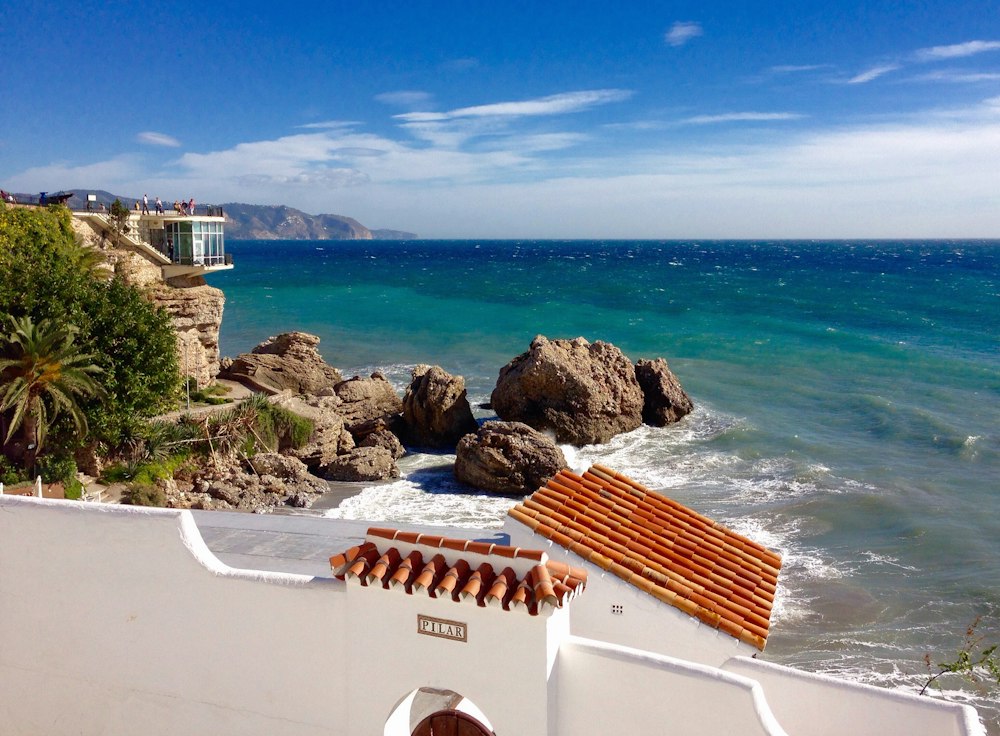
> A balcony over the sea, and the coast's prettiest white villages behind it.
What to see & do in Nerja
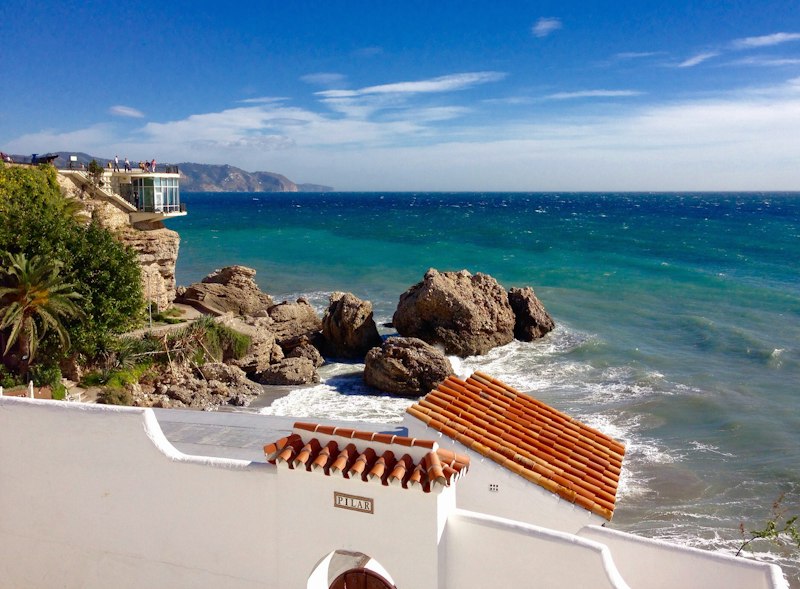
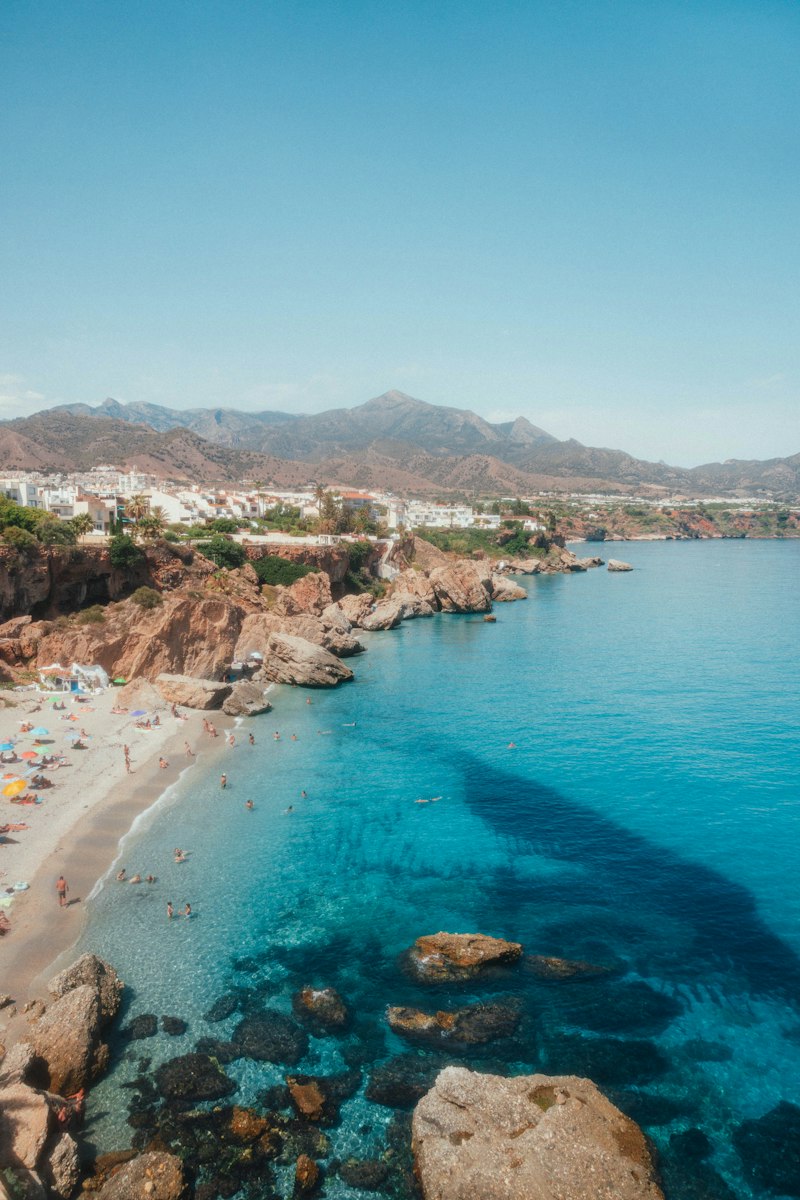
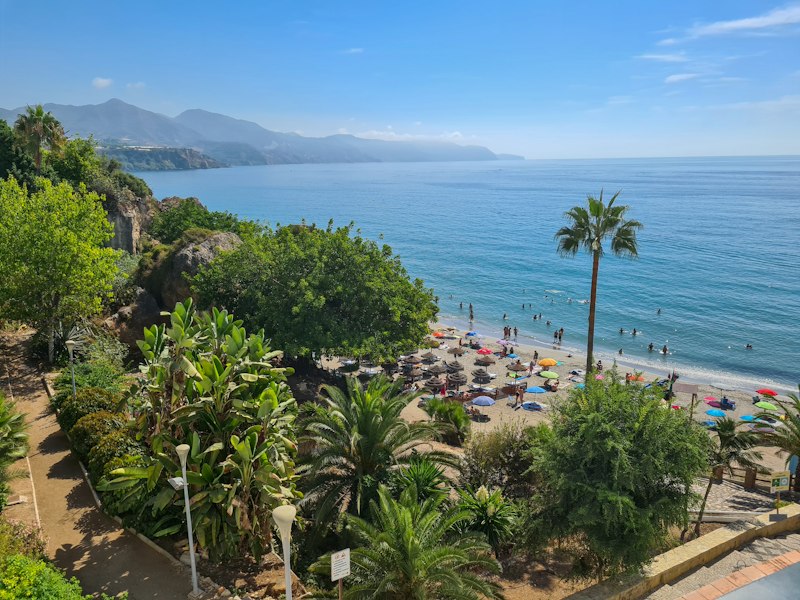
- Balcón de Europa. maps Nerja's famous palm-lined promontory, a stone balcony jutting over the sea with beaches on either side — the postcard of the eastern coast.
- Cuevas de Nerja. maps A vast series of caverns with giant stalactite columns and prehistoric rock art, discovered in 1959 — one of Andalusia's great natural wonders.
- Frigiliana. maps Just above Nerja, one of the prettiest villages in Spain — a steep Moorish quarter of whitewashed lanes, flowers and views to the sea.
- Acantilados de Maro-Cerro Gordo. maps A protected stretch of cliffs, hidden coves and crystal water east of town — reachable on foot, by kayak or by boat, with the Maro waterfall as a bonus.
- Casco antiguo & Playa de Burriana. maps Pedestrian white streets full of terraces, and the town's main beach — a broad, blue-flag stretch with every water sport and the famous Ayo paella.
History & cultural tourism
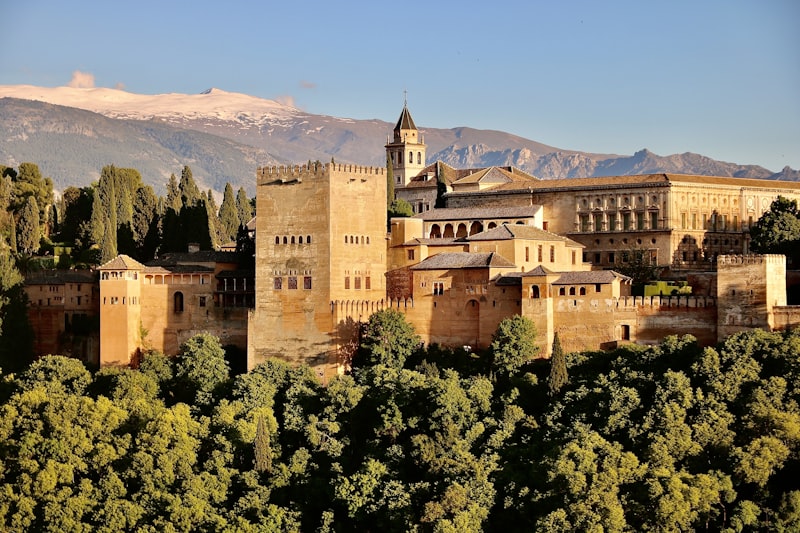
The east of the coast is layered with history — prehistoric art in the Nerja Caves, the Moorish villages of the Axarquía and, closer than from anywhere else on the coast, the great Nasrid capital of Granada. It's a superb base for culture: the beach in the morning, a World Heritage Site in the afternoon.
- Nerja & the Axarquía. The Nerja Caves and their rock art, Frigiliana's Moorish quarter and Vélez-Málaga's fortress and old town tell the region's own long story.
- Granada (~1 h). The Alhambra and Generalife — the crowning jewel of Moorish Spain, and closer to Nerja than to almost anywhere else on the coast.
- Málaga (~50 min). The Moorish Alcazaba and Gibralfaro castle, the Renaissance cathedral, a Roman theatre and the Picasso Museum — a full day of history in the capital.
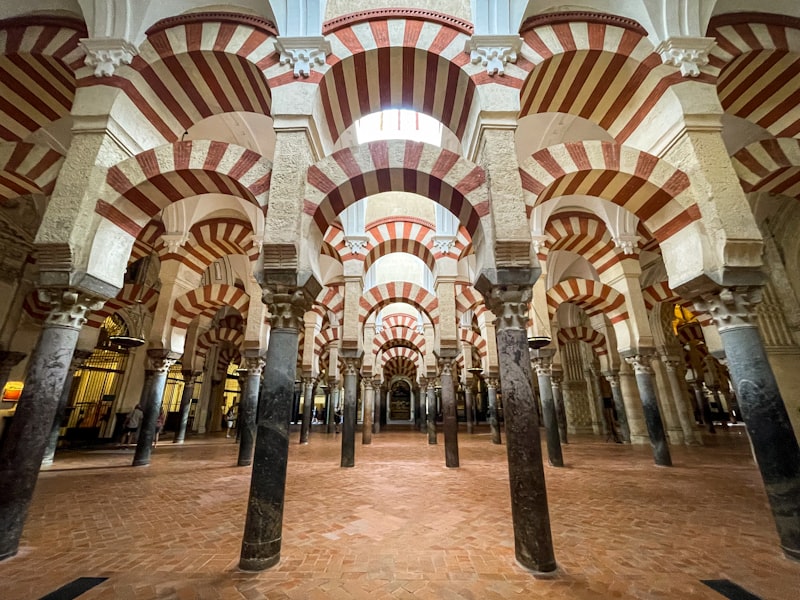
- Córdoba (~2 h 15). The Mezquita-Catedral, a breathtaking forest of arches and one of the world's great buildings — a UNESCO World Heritage Site.
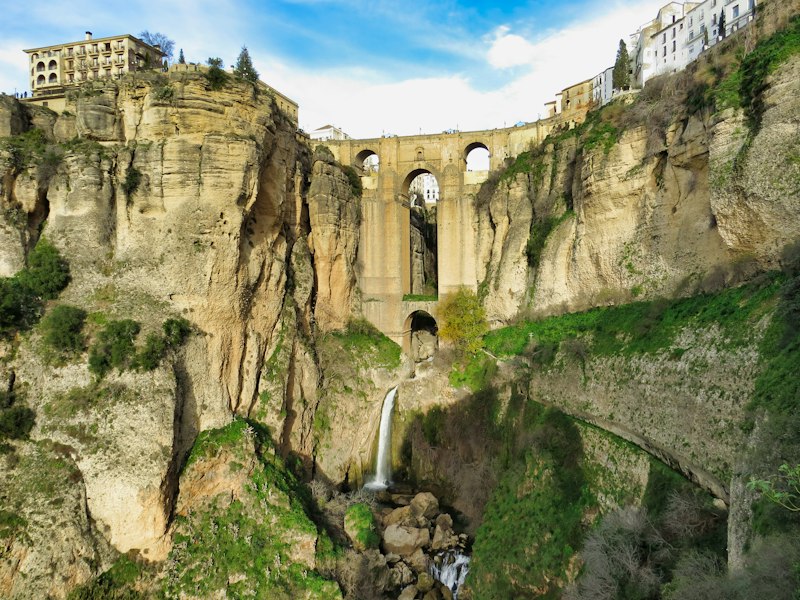
- Ronda (~2 h). The Puente Nuevo spanning the El Tajo gorge and one of Spain's oldest bullrings, in a town perched on a cliff.
The beaches of Nerja & the East
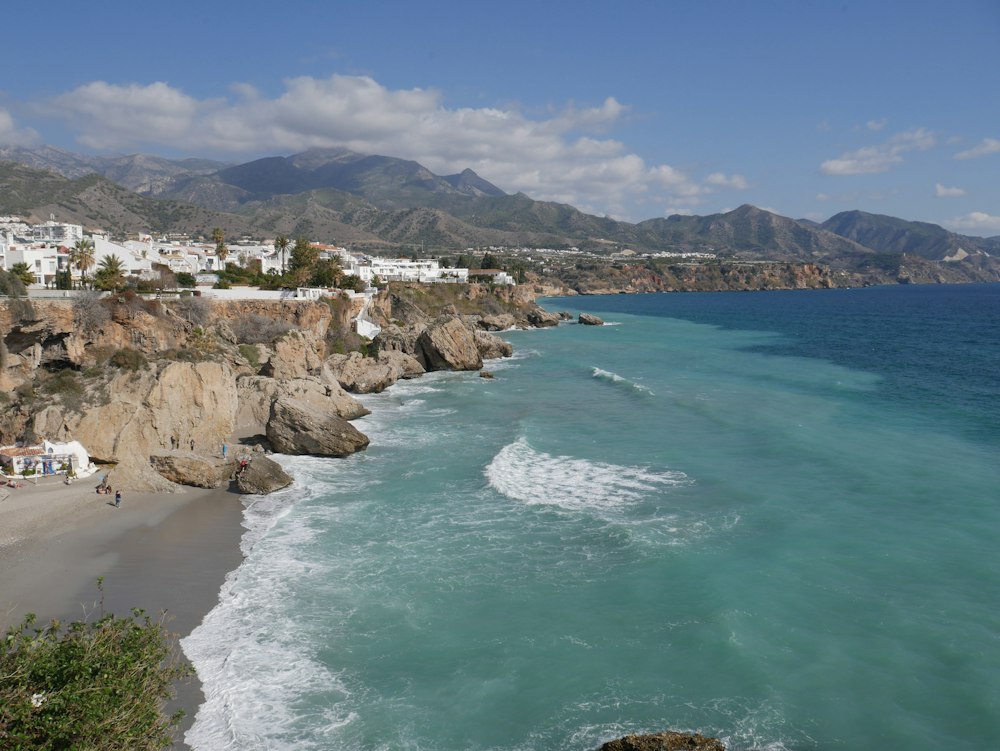
This is the coast's most scenic shoreline — from broad town beaches with every service to tiny cliff-backed coves you reach on foot or by kayak. The water here is famously clear.
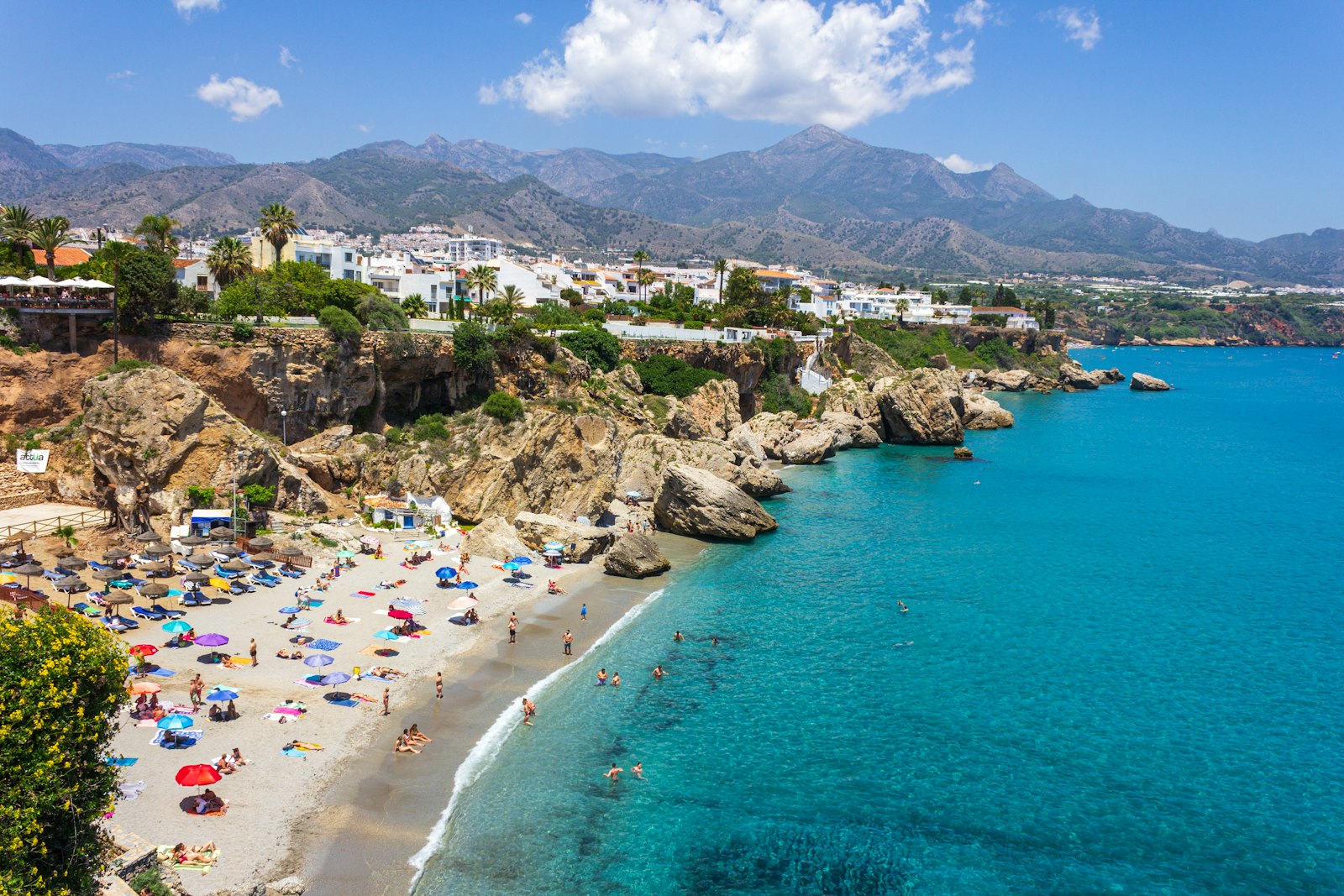
- Playa de Burriana. maps Nerja's main beach — broad golden sand, blue flag, water sports and chiringuitos, including the legendary Ayo paella.
- Playa Calahonda & El Salón. maps Small, sheltered coves right below the Balcón de Europa — picturesque and steps from the old town.
- Playas de Maro. maps Wilder coves inside the protected cliffs of Maro-Cerro Gordo — turquoise water, snorkelling and the Maro waterfall.
- Torrox & Torre del Mar. maps Long, easy family beaches just west along the coast, backed by relaxed promenades and famous for their mild microclimate.
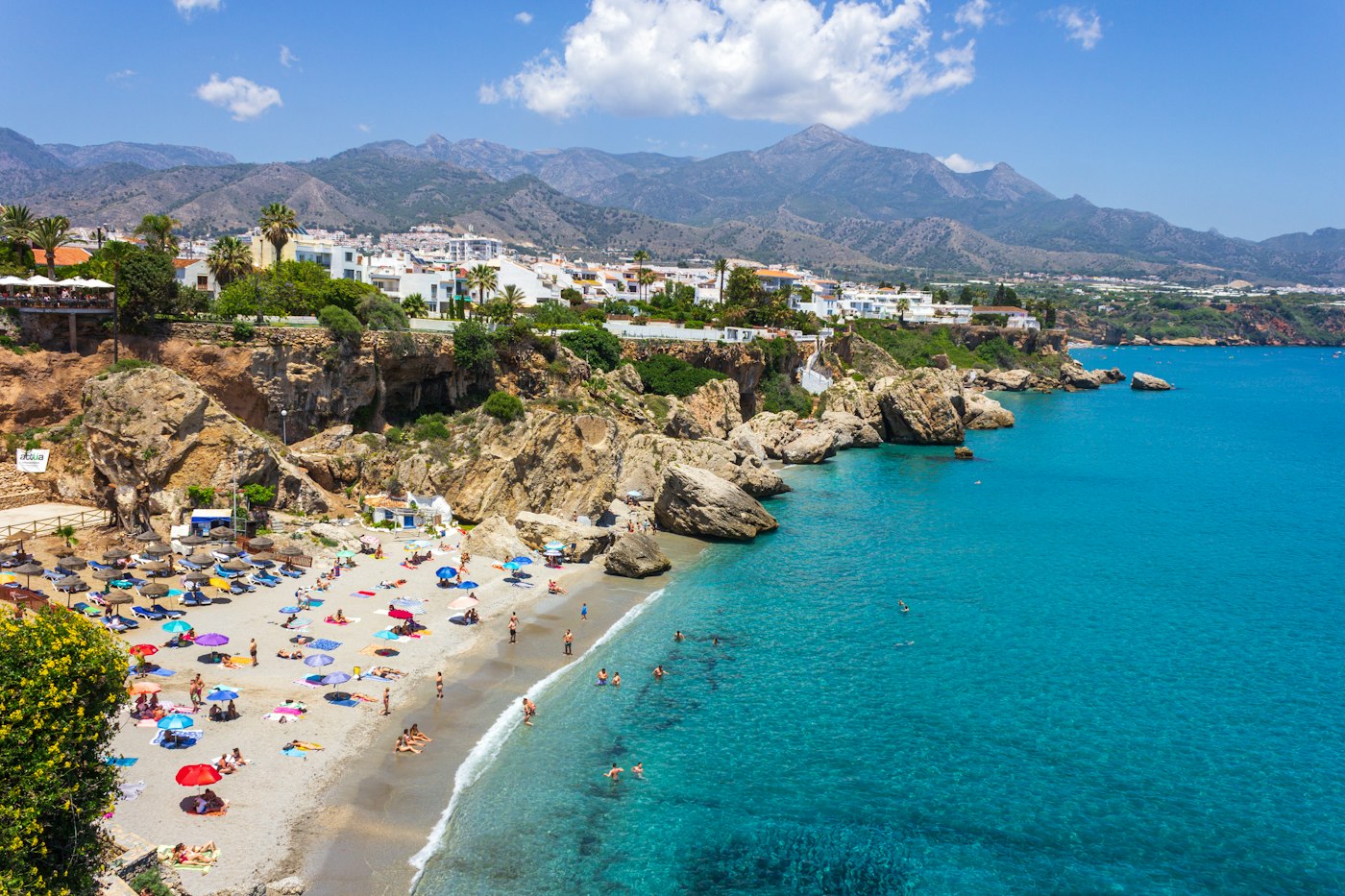
The Nerja shoreline below the Balcón de Europa — beaches, coves and famously clear water.
Towns & areas
"Nerja & the East" covers Nerja itself and the string of towns and white villages of the Axarquía — useful whether you're choosing where to base a holiday or where to look for a home.
- Nerja centro & Balcón. The walkable, all-year heart — white streets, terraces and the beaches of the old town on your doorstep.
- Burriana & Capistrano. The beach and hillside residential areas east of the centre, popular with holiday homes and long-stay residents.
- Frigiliana & Maro. The white village in the hills and the little coastal hamlet by the cliffs — the prettiest, quietest corners of the area.
- Torrox & Torrox Costa. A traditional white town and its coastal resort, which likes to claim "the best climate in Europe."
- Vélez-Málaga & Torre del Mar. The capital of the Axarquía and its lively beach town — services, markets and a long promenade.
- Rincón de la Victoria & Cómpeta. A family beach town close to Málaga, and, up in the hills, the wine village of Cómpeta and its Moscatel vineyards.
Where to eat in Nerja
Nerja eats simply and superbly — beach paella cooked over wood, old-town tapas bars and the mountain cooking of the Axarquía up in Frigiliana. Don't leave without an espeto de sardinas grilled over driftwood on the beach.
- Merendero Ayo. The Burriana beach institution where huge pans of paella are cooked over open fires — with free seconds.
- Oliva. Nerja's smart, modern kitchen for contemporary Andalusian cooking near the Balcón.
- La Taberna de Pepe / old-town tapas. Classic white-street bars for pescaíto, boquerones and cold beer.
- Chiringuitos on Burriana. Espeto de sardinas, fresh fish and long lunches with your feet almost in the sand.
- Frigiliana. Up in the village, mountain plates, local wine and terraces with huge views to the sea.
Cuisine & wine
The east adds its own flavours to Málaga's Mediterranean kitchen — mountain cooking, subtropical fruit and the sweet Moscatel wines of the Axarquía. Here's what to order:
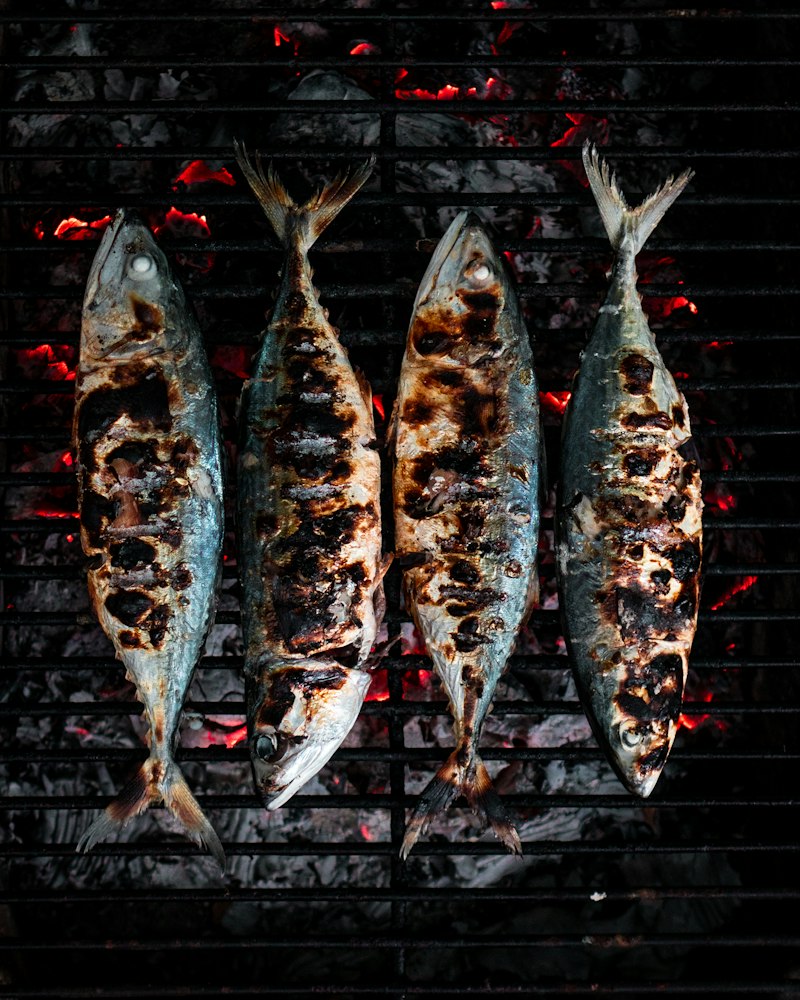
- Espeto de sardinas. Sardines skewered on a cane and grilled over driftwood embers on the beach — the signature dish of the Costa del Sol.
- Paella a la leña. Nerja's Burriana beach is famous for paella cooked over open wood fires — a whole tradition of its own.
- Migas & ajoblanco. Axarquía mountain fare — fried breadcrumbs with grapes, and the cool almond-and-garlic soup born in these hills.
- Aguacate & mango. The Axarquía is Europe's subtropical orchard — avocados, mangoes and custard apples grown all around Nerja.
- Boquerones & pescaíto frito. Fresh anchovies and a crisp platter of fried fish, the way the coast has eaten for generations.
- Moscatel wine of Cómpeta. The sweet Moscatel of the Axarquía hills — the local wine route around Cómpeta is a lovely day out.

Where to stay in Nerja
For a comfortable, flexible stay, GR Estates offers a curated range of apartments and homes across the Costa del Sol — from seafront apartments to hillside villas with views over the coves. Waking to the sound of the waves with panoramic Mediterranean views is the kind of thing you don't forget.
Explore our holiday rentals in Nerja
Seafront apartments, private pools and beach access — find your home away from home.
Getting there & getting around
- From the airport. Málaga–Costa del Sol airport (AGP) is ~50–60 minutes away by car (A-7 / N-340), taxi or transfer.
- No train. There's no rail line east of Málaga, so a car is handy — though frequent Alsa buses connect Nerja and the Axarquía with Málaga and the airport.
- On foot. Nerja's old town and the Balcón de Europa are very walkable, with the main beaches just below.
- Local buses & taxis. Buses link Nerja with Frigiliana, Maro and the Axarquía towns; taxis and ride apps are readily available.
Best time to visit
Nerja enjoys a mild microclima and more than 300 days of sun. Summer (June–September) brings warm seas, festivals and full-swing beach life. Spring and autumn are arguably the sweet spot — mild days in the low-to-mid 20s, ideal for the beaches, the caves and the Río Chíllar walk, and quiet enough to enjoy it all. Even winter stays gentle at around 17–18°C by day, which is exactly why so many northern Europeans overwinter here.
Sports & the outdoors — all year round
The east is the Costa del Sol's playground for the outdoors: a huge natural park behind town, protected cliffs and coves in front of it, and — closer than from anywhere else on the coast — the ski slopes of Sierra Nevada. With 300+ days of sun, every season stays open twelve months a year.
- Río Chíllar walk. The famous summer hike straight up the riverbed behind Nerja — wading through cool water between towering gorges. One of Andalusia's most loved walks.
- Sierra de Tejeda-Almijara. A vast natural park of peaks and trails rising behind the coast, including the climb to El Cielo above Frigiliana.
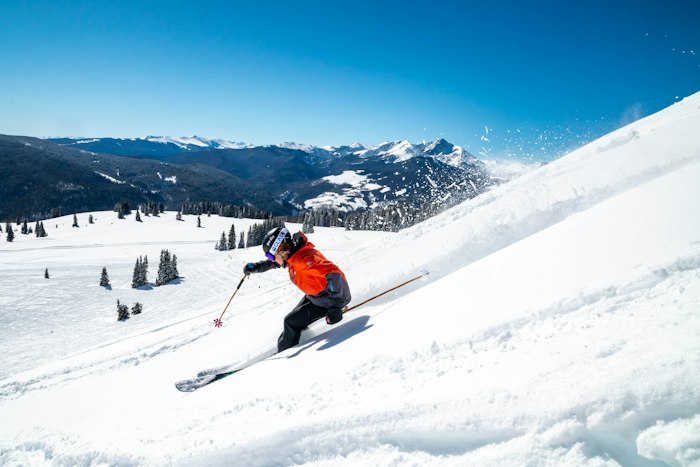
- Skiing at Sierra Nevada. Europe's most southerly ski resort is only about 1 h 15 away — so in spring you really can ski in the morning and be on a Nerja beach the same afternoon.
- Kayak & water sports. Paddle and kayak to the Maro cliffs and waterfall, plus snorkelling and diving in some of the clearest water on the coast.
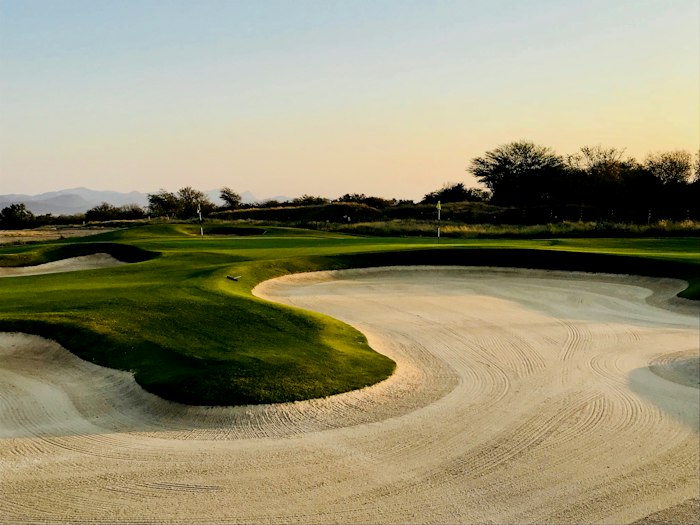
- Golf. Fewer courses than the west, but Baviera Golf (Caleta de Vélez) and Añoreta (Rincón de la Victoria) are within easy reach along the coast.
- Padel & tennis. Padel is Spain's fastest-growing sport — clubs and courts around Nerja and the Axarquía make it easy to book a game.
- Cycling. The mountain roads of the Axarquía are a favourite with road cyclists, with long climbs and huge sea views.
- Boat trips. Catamaran and boat trips run from Nerja to the Maro coves and along the cliffs — the best way to see this coastline.
> Ski Sierra Nevada in the morning, swim off a Nerja cove the same afternoon.


Living in Nerja & the East
Nerja offers a gentler, more Spanish version of Costa del Sol life. It has one of the most established international communities on the coast — long-standing British, Scandinavian and northern-European residents — so services in English are common, yet the town keeps its whitewashed, small-town character. You'll find year-round shops and restaurants, a health centre with the hospital at Vélez-Málaga nearby, international schools within reach, a mild microclimate and, just inland, the villages of the Axarquía for a quieter pace. It's a place people come for a holiday and end up staying.
If a longer stay is on your mind, our team lives and works on this coast — we're happy to talk through towns, schools and the practical side of moving over.
Events & festivals
- Cruces de Mayo (May). Flower-decked crosses and courtyards fill the white streets in spring.
- Festival Cueva de Nerja (summer). Music, dance and ballet performed inside the Nerja Caves — a spectacular one-of-a-kind setting.
- Festival Tres Culturas, Frigiliana (August). The white village celebrates its Moorish, Jewish and Christian heritage with music, food and markets.
- Feria de Nerja (October). The town's main fair in honour of its patron — casetas, flamenco, horses and fireworks.
Nerja & East FAQ
What is there to see and do in Nerja?
Nerja is known for the Balcón de Europa, the Nerja Caves, the beaches of Burriana, Calahonda and Maro, the Maro-Cerro Gordo cliffs and the white village of Frigiliana. It's the most beautiful, authentic destination on the eastern Costa del Sol.
How do I get to Nerja from Málaga airport?
Málaga airport (AGP) is about 50–60 minutes away via the A-7. Nerja has no train, so the usual options are car, taxi, transfer or the Alsa buses that link Nerja with Málaga and its airport.
When is the best time to visit Nerja?
Nerja enjoys a mild microclimate and 300+ days of sun. Beach season runs May to October, while spring and autumn are ideal for the beaches, the caves and the Río Chíllar walk, with mild weather and fewer crowds.
Is Nerja good for families?
Yes — Nerja is very family-friendly: Burriana beach with every service, the Nerja Caves, calm coves, a pedestrian old town and a large international community make it a comfortable, safe destination with children.
Which towns does "Nerja & the East" include?
Besides Nerja, the eastern area (the Axarquía) includes the white village of Frigiliana, Maro, Torrox and Torrox Costa, Vélez-Málaga and Torre del Mar, Rincón de la Victoria and inland wine villages such as Cómpeta.
Can you live in Nerja all year round?
Absolutely. Nerja has a large, well-established international community, year-round healthcare, shops and restaurants, and a quieter, more authentic pace than the western coast. Its mild microclimate makes it lovely for permanent living.
Which are the best beaches in Nerja?
Highlights include Playa de Burriana (the main beach with every service), Playa Calahonda and El Salón by the Balcón de Europa, and the unspoilt coves of Maro within the Maro-Cerro Gordo cliffs.
Are the Nerja Caves and Frigiliana worth visiting?
Definitely. The Nerja Caves are a spectacular set of galleries with giant formations and prehistoric art, discovered in 1959. Frigiliana, minutes away, is one of Spain's prettiest villages, with its Moorish quarter of steep, whitewashed lanes.
Photography: GR Estates & Unsplash.
More Costa del Sol guides
Written with AI assistance and reviewed by the GR Estates team before publication. AI transparency