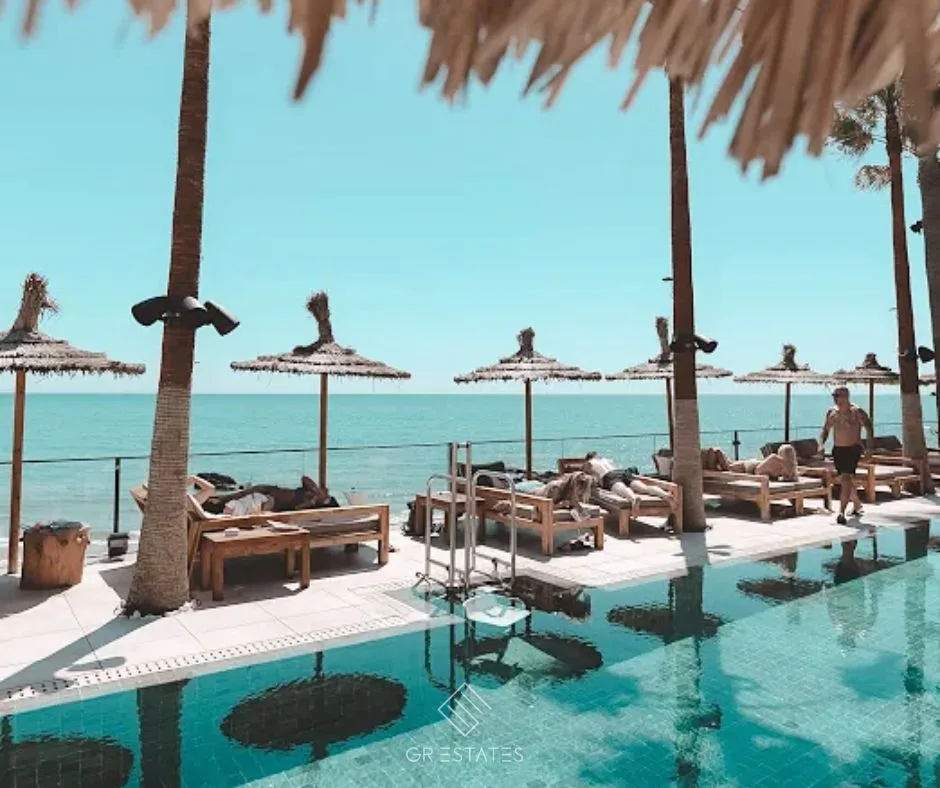
Living in Torremolinos
Torremolinos was the town that started the Costa del Sol tourism boom, and it has aged into something more interesting than its 1960s reputation: a genuinely diverse, welcoming, year-round town that happens to sit right next to Málaga Airport. For anyone who values connection, that proximity is hard to beat — roughly ten minutes to the terminal and directly on the Cercanías C1 train line into Málaga city and along the coast, so you can live here without a car and travel easily.
The town has two faces that buyers love. There's the buzzy, cosmopolitan centre around Calle San Miguel and the Plaza Costa del Sol, and then there's La Carihuela — the old fishing quarter, a low-rise seafront neighbourhood famous for its espeto sardine grills and some of the best seafood on the coast. Torremolinos is also one of Spain's most open and inclusive towns, with a strong international and LGBTQ+ community and a real sense of welcome that keeps people coming back — and buying.
Everyday life
- La Carihuela — the old fishing village turned seafront promenade, chiringuitos and long beaches; the town's most characterful spot.
- The centre — Calle San Miguel's shops and terraces, Plaza Costa del Sol, and the Cuesta del Tajo steps down to Bajondillo beach.
- Beaches — Bajondillo, Playamar and Los Álamos run for kilometres, with a full seafront promenade.
- Getting around — the C1 train and the airport on your doorstep make Torremolinos one of the easiest towns on the coast to live in car-free.
Neighbourhoods of Torremolinos
La Carihuela
The old fishing quarter and the town's most sought-after address — a low-rise, seafront neighbourhood with a village feel, a long promenade and legendary beachfront restaurants. Mostly apartments; strong holiday-let and lifestyle demand. Ideal for buyers who want character and the sea on their doorstep.
Town centre & El Calvario
The lively heart around Calle San Miguel and the Plaza Costa del Sol, plus the older El Calvario quarter. Walkable, well connected to the train, and full of everyday life. A practical choice for year-round living and long-term letting.
Playamar & Montemar
Beachfront apartment districts east and west of the centre — many with pools and sea views, a short walk to the sand and the promenade. Popular for second homes and holiday rentals that want beach access with a calmer setting than the centre.
Los Álamos
The eastern end towards the airport — long, open beaches, a more relaxed feel and some newer stock. Known for its beach clubs and space, and handy for anything airport-related.
Buying in Torremolinos
Torremolinos is overwhelmingly an apartment market, and that plays directly to its strengths as a rental and second-home town: compact, well-connected homes near the beach and the train, with prices that generally represent good value against its glossier neighbours to the west. La Carihuela and the beachfront command the premium; the centre and inland offer more for the money.
The combination of airport proximity, the train, and a strong year-round community gives Torremolinos an unusually flexible investment case — a home here works as a summer let, a long-term rental or an easy lock-up-and-leave. We know which blocks catch the sea view, which communities are well managed, and where the rental demand actually concentrates, which is the detail that turns a fair buy into a good one.
Available now
Property for sale in Torremolinos
— homes currently listed — updated live from our books and the MLS.
Renting and holiday lets in Torremolinos
Few towns on the coast rent as reliably as Torremolinos. Its holiday-let demand is broad and long — beaches, nightlife, the airport and its reputation as an open, welcoming destination keep visitors coming across the calendar — and long-term demand from residents is steady thanks to the town's amenities and transport. La Carihuela and the beachfront are the standout short-let performers; the centre anchors long-term letting.
To let short-term you must register the property as a vivienda con fines turísticos (VFT) with the regional tourism authority before advertising, meet the standards, and check your community of owners' rules. We check all of this before you buy and handle the registration for our owners, keeping each licence private.
The buying process for foreign buyers
- NIE number — your Spanish foreigner's tax ID; we help you get it.
- Independent lawyer — searches, community and debt checks, deposit protection. Essential and separate from the agency.
- Costs on top — roughly 10–13%: transfer tax (ITP) on resales or VAT + stamp duty (AJD) on new-builds, plus notary, registry and legal fees.
- Mortgages — non-residents can usually borrow up to around 70% of value.
- Notary & completion — signing the escritura before a notary, who registers it.
We coordinate the lawyer, notary and bank in your language. See our journal on the NIE and buying process, mortgages for non-residents and the Málaga market.